

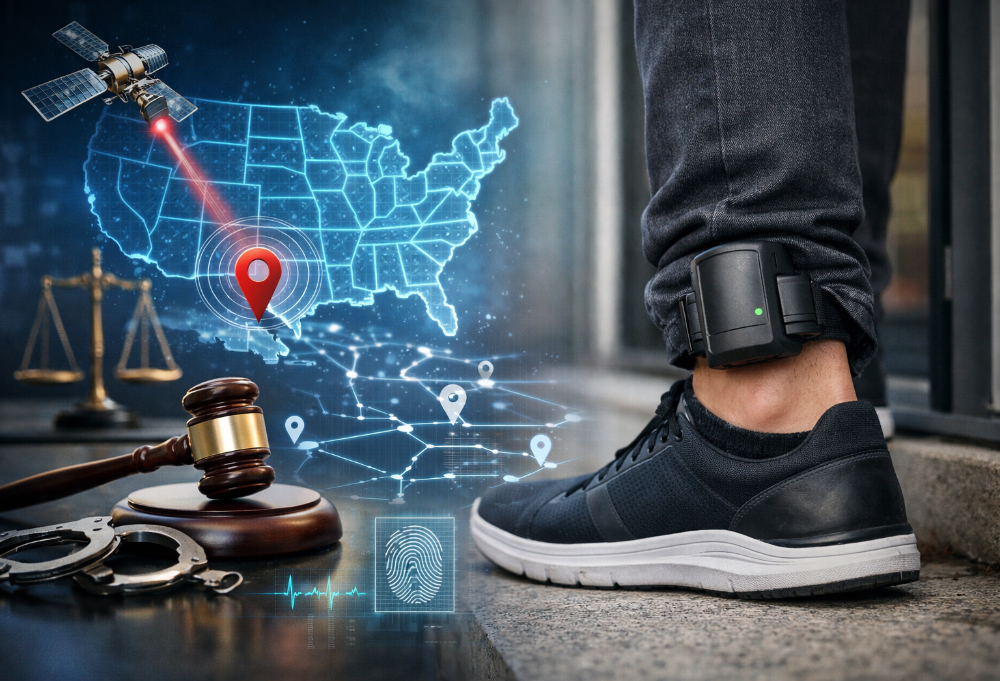
Getting released from jail before trial used to mean little more than posting bail and showing up to court dates. In 2026, that picture looks very different. Across Florida, and especially in the Tampa Bay region, GPS monitoring bail conditions have become a standard feature of pretrial release for a wide range of charges. Whether you are facing a felony, a repeat misdemeanor, or a domestic violence allegation, there is a real chance that a judge will attach an ankle monitor to your release order before you ever walk out the front door.
GPS ankle monitors are no longer reserved for the most serious offenders. Courts in Hillsborough County and surrounding areas have expanded their use significantly over the past several years, driven by concerns about public safety, flight risk, and court appearance rates. For defendants and their families, understanding what these conditions actually require is not optional. Ignoring or misunderstanding a GPS monitoring condition can turn a manageable legal situation into a much more serious one almost overnight.
The monitor itself is a tamper-resistant device worn around the ankle at all times. It transmits location data continuously to a monitoring agency, which in turn reports any violations to pretrial services or directly to the court. This means your movements are logged around the clock, and any deviation from approved zones is flagged immediately.
Florida Pretrial Release Requirements and How Judges Set Conditions
Florida pretrial release requirements are governed by a combination of state statute and judicial discretion. Under Florida law, a defendant has a general right to pretrial release on reasonable conditions, with certain exceptions for capital offenses or situations where the state presents evidence of a danger to the community. Within those boundaries, judges have wide latitude to impose conditions they believe are necessary to protect the public and ensure the defendant returns to court.
When a judge is determining conditions of release in a Hillsborough County courtroom, several factors come into play. These include the nature and severity of the charged offense, the defendant’s criminal history, ties to the community, employment status, and whether there is any history of failure to appear. A defendant with strong local roots, a steady job, and no prior record may secure a straightforward bond with minimal conditions. Someone with prior failures to appear, open cases in other jurisdictions, or charges involving violence or controlled substances is far more likely to see GPS monitoring attached to their release order.
Florida Statute 907.041 governs pretrial detention and release and gives courts the authority to impose electronic monitoring as a condition of release. Judges in Tampa and throughout Hillsborough County have used this authority broadly in recent years. In many cases, electronic monitoring is presented not as a punishment but as an alternative to remaining in custody, which means accepting the monitor is often the only realistic path to going home before trial.
The Reality of a Bail Bond With an Ankle Monitor in Tampa
Securing a bail bond with an ankle monitor in Tampa involves more steps than a standard bond. Once the court sets bond with a GPS monitoring condition, the defendant or their family typically works with a licensed bail bondsman to post the financial guarantee. However, posting the bond is just the beginning. Before release is finalized, the defendant must also be fitted with the ankle monitor through an approved monitoring provider.
The costs associated with electronic monitoring are borne by the defendant in most cases. Equipment fees, daily monitoring fees, and installation costs can add up quickly, sometimes running into hundreds of dollars per month. These expenses come on top of the bail bond premium, creating a real financial burden for many families. It is important to clarify all costs upfront with both the bondsman and the monitoring provider so there are no surprises.
Once the monitor is in place, the defendant will be given a specific set of rules. These typically include approved home zones, curfew hours, exclusion zones (such as staying away from a victim’s address or a school), and check-in requirements. Any alert triggered by the monitor (whether from leaving an approved zone, tampering with the device, or a dead battery) is reported to pretrial services and can result in immediate action from the court or the bail bondsman.
Bondsmen in the Tampa area take these alerts seriously. When a monitoring alert is generated, a bondsman has both the legal authority and the financial motivation to act quickly, since they are on the hook for the full bond amount if the defendant fails to appear or absconds. This means communication between the defendant and the bondsman is critical throughout the pretrial period.
Violating Bail Conditions Under Florida Law: Consequences You Need to Understand
Violating bail conditions in Florida is not a minor administrative matter. It carries real legal consequences that can dramatically affect the outcome of the underlying case and result in new criminal exposure. When a defendant is found to have violated a condition of pretrial release, the judge has several options available, and none of them are favorable to the defendant.
The most immediate consequence is typically a motion to revoke pretrial release. The state attorney’s office can file this motion based on a monitoring violation report, a new arrest, or any other credible evidence that the defendant has failed to comply with release conditions. Once that motion is filed, the defendant can be taken back into custody pending a hearing. In many cases, a judge will simply remand the defendant without bond at that point, meaning no amount of money will secure release until the underlying case is resolved.
Beyond revocation, a defendant who removes or tampers with an ankle monitor in Florida can face additional criminal charges. Under Florida law, interference with an electronic monitoring device is a separate criminal offense that compounds the original legal problem significantly. A new felony charge added to an existing case changes the entire calculus of plea negotiations and potential sentencing exposure.
Violations also damage credibility with the court. Judges and prosecutors pay close attention to how defendants conduct themselves on pretrial release, and a pattern of violations signals that supervision is not working. That perception can influence everything from plea offers to the judge’s sentencing decision if the case goes to trial and results in a conviction.
Working With a Bail Bondsman to Stay Compliant in Hillsborough County
Staying compliant with GPS monitoring conditions requires more than just wearing the device. It requires active communication, careful planning, and a clear understanding of what is and is not permitted under the release order. A knowledgeable bail bondsman operating in Hillsborough County can be a valuable resource throughout this process.
Good bondsmen do not simply collect their premium and disappear. Many established bail bond agencies in the Tampa area maintain ongoing contact with clients throughout the pretrial period, helping them understand their obligations and flagging potential issues before they escalate. If a defendant needs to travel outside an approved zone for a medical appointment or a work obligation, the proper procedure is to request a modification of conditions through the court in advance, not to simply leave and hope the monitor alert is overlooked.
Defendants should also keep their monitor charged at all times. A low battery alert is treated as a potential tampering event by some monitoring systems, and repeated low battery warnings can trigger a compliance review. Keeping the device charged and treating every condition as non-negotiable is the safest approach to preserving pretrial freedom.
Conclusion
GPS monitoring has become a defining feature of pretrial release in Florida, particularly in Tampa and Hillsborough County. Understanding how these conditions work, what violations mean under Florida law, and how to work effectively with a bail bondsman can make the difference between staying free before trial and returning to custody. Compliance is not just a legal obligation; it is the foundation of a stronger defense.
Need Bail and Surety Bonds Near You?
If you or someone you know needs fast, dependable bail assistance, reach out to us at Cigar City Bail Bonds today. With over 20 years of experience in law enforcement and the bail industry, we understand how stressful this time can be, and we’re here to make it easier. Our team is ready 24/7 to handle your bail or surety bond quickly and efficiently, whether you’re in Hillsborough or Pinellas County. We take pride in being just a call or click away, so don’t wait; contact us now and let us help you get back to what matters most.